AI/LLM Observations [Aug. 2026]
In Response
A post from Thomas Fuchs went by on Mastodon asking for thoughts on the ethics of AI/LLMsterms. The topic has been bubbling in the back of my brain. While this post is a response, it's more a place to write down my thoughts to help me think through them.
Background Points
I'm not at the point where trying to write a single, cohesive post makes sense. For now, it's bullet points.
-
I write a lot of code. My point of view is coming from the perspective of a developer.
-
I wonder how much variation folks have when they use the term "vibe coding". For me, it's when someone gives an LLM the ability to read and update their code directly. Something that still freaks me out. Getting into why that is is a topic for another day.
-
The reason for the clarification of the term is because if someone asks me if I use AI to code, the answer is yes. I use duck.ai to prompt in effectively the same way I use search engines. In fact, I'm increasingly going to it as the first move.
I read the code it gives me, then place it into my codebase myself after thinking through what it's going to do and how it's going to do it. Updating my mental map of the process I'm working on.
(That may be one of the biggest things that freaks me out about full on vibe coding. I don't feel like I'd have a mental map of what's going on if I'm not seeing everything myself)
-
I should point out that I start with documentation before going to either an AI/LLM or a search engine. Especially if I've got some prior knowledge about what I'm doing.
For example, I'm working with rust's nomnom parsing library. While there's a lot to it, I've spent a lot of time with it. It's easy for me to find answers directly form the docs when I hit a sticking point.
-
I've learned a bunch from using LLMs like a search engine. The code samples they return are generally much larger than I get on Stack Overflowso. That larger surface area has frequently lead to second order learning where I'm exposed so something new that's adjacent to the thing I was looking for.
Again, this is not something I would have been exposed to if I was doing straight vibe coding and not looking at the code produced. And, even if I was looking, things don't really set in for me unless I type them in myself.
-
Beyond my personal experience, I had photographer buddy (who's not a techie) build their own website with an LLM. That's where things get the most interesting to me. Using something to support creative work instead of trying to use it as a generator of something creative.
-
I totally get the appeal of quick solutions to problems outside your field of expertise. Doubly so when there aren't even resources available to assist. For instance, I've started playing Magic. One of my favorite things about the game is the card art. Some of it's beautiful. Some of it, less so. Here's two versions of the same card to give you an idea.
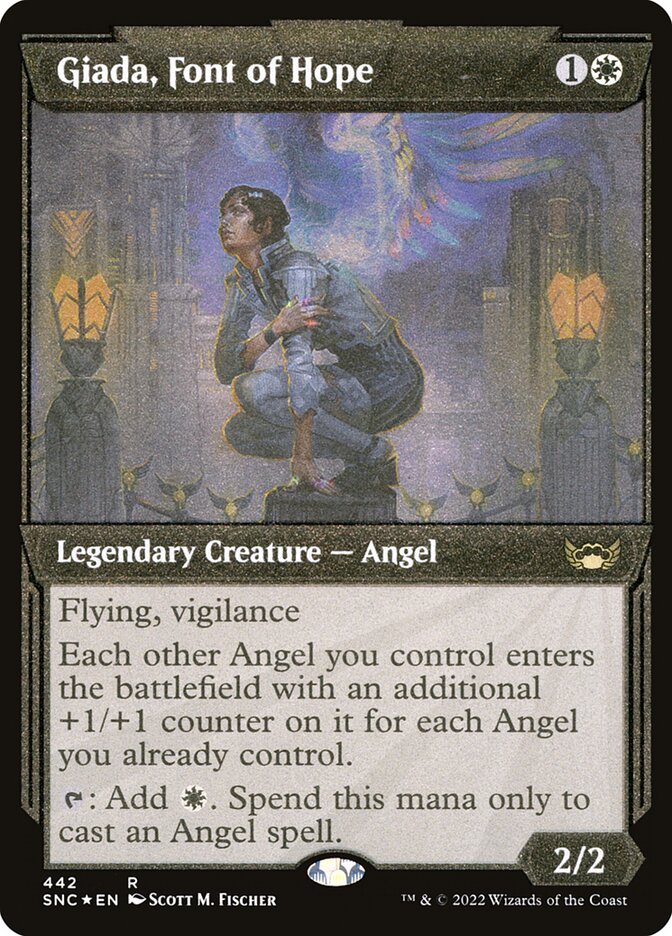
And
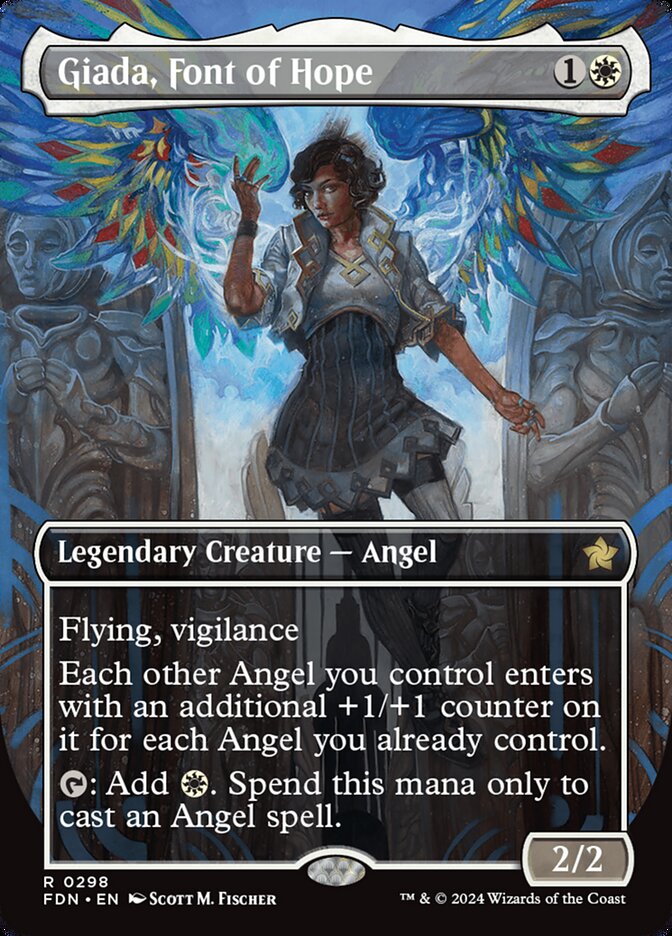
The first one is fine. The second is way better. It's shaper, more vibrant, and the art extends to the edges of the card.
Not every card has multiple options to choose from. The result is collections without a consistent look or feelbox. I'd like to make custom card art to bring everything into the ball-park. I don't have anywhere near the skill to do that though.
The appeal of using AI tools to generate custom art is high. A three sentence prompt got me this in about twenty seconds.

It would work great as a replement for an inconsistent looking card in my deck of ninjasninjas. Just throw it in a card makermaker, add the text, and off you go.
No one but me and the folks I play with would see the cards. I wouldn't be presenting them as art I made any more than I would a piece of stock art.
If I didn't know more about AI generation tools, I'd do it in a heartbeat. But, I do know about them. Weirdly, I'm less concerned about what they did (slurping up every image they could get their hands on regardless of copyright to feed to the machines) compared to what they're doing: making it even harder for artists to make a living from their art.
This is not dissimilar to what happened to the photography market when digital cameras came on the scene and migrated into high quality tools built in to the phones in our every day carryphotos.
It's different though. The camera in a phone is a tool for making things. AI Gen tools do the making themselves. The distinction feels subtle to say out loud, but it's profound in impact.
Sadly, artist seem to be getting hit just as hard as photographers who saw their market decimated by the new tech.
Outro
Where this all leaves me is:
-
I don't make my own Magic cards. I don't know if that's as much an ethical decision or more about wanting to support artists. It's some of each. I just don't know the ratio. Nor do I care. I've made the decision. Spending time unwrapping it further is uninteresting.
-
I'm in favor of tools that support folks doing more creative things. Being able to build a website to present your photos and then getting more excited about taking photos as a result is an improvement to the world.
As with just about everything, that means there's some utility to it that's within the general bounds of ethical usage of the system as it exists.
-
Part or talking about ethics of AI feels like conversations of separating art and artist. If what you get out of it is beneficial but the ingestion of raw material was out of bounds, where do you stand.
In a much more extreme example, my understanding is a lot of our advancement in understanding the body and creating treatments for it came from absolutely awful situations.
Should we disregard life saving advancements because they were discovered through horrors? Does the answer change over time?
-
I'll continue to use LLMs as search tools. Even though LLMs slurped up code the same way they slurped up art, I have way less of a problem with that.
The analogy that just occurred to me is one of patents. If you've genuinely created something new, it makes sense that you get some time with it to be just yours if that's the direction you want to take.
But, that time shouldn't be unlimited. It also shouldn't bar folks who come up with the same idea/approach/whatever on their own from being able to do the thing as well.
We've collectively put all this tooling into the open source world to make things. I believe it would be a disservice to humanity to draw a hard line in the sand against using it in these new ways.
The corporate capitalist capturing of the tools is a bummer, but if more folks can make more things that help them make more things, I don't want to lose that.
-
Thinking about my own code. If something I made gets slurped up into an LLM which uses it to show someone how to do something new, I'm cool with that.
If an AI tool picks up my photography and uses it to generate images, they can fuck right off.
We're still in the very early days of all this. I'm not a big prediction maker but I've got this riff. It's on Arthur C. Clarke's Third Law:
Any sufficiently advanced technology is indistinguishable from magic.
My riff:
Any sufficiently distributed technology is indistinguishable from nature.
I don't see a world where AI and LLMs don't proliferate to the point where they become an envoronmental background. Something you only notice if you decide to think about it. The ethical and moral considerations fading into the background the same way we rarely think about them in terms of saw mills.
-a
Endnotes
-
I'm not getting into the environmental issues at either the global or local level. That's a shit show and one that should be considered in the overall conversation.
But, it's important that we can talk about things at different levels and through different lenses. Kinda like the Six Thinking Hats.
-
Discussing ethics is both interesting and important. It's also a tough sell. Or, rather, a tough way to convince corporations to sell less. The foundation of the world of publicly traded companies is quarterly profits. For all intents and purposes, anything that increases them without lading the C-suite in jail should be expected.
It reminds me of this piece from a former CIA officer where he talks about the most important character trait to being a good spy. His answer:
The most important thing CIS, or Mossad, or MI-6 look for when they make a possible new spy, is somebody who seeks validation from an external source. They're looking for somebody who is so loyal and so dependent on external validation that they will lie, steal, cheat, commit crimes, cross borders, change their name, and do anything they have to do in order to get validation and approval from that one, focused, external source.
And, when the CIA finds a person like that, they can train that person to become dependent on the CIA. And then, the loyalty of that individual becomes so focused on the institution that they don't need any other attention from anywhere else. As long as they serve the one organization that validates and appreciates their work.
I see corporate execs as fitting the mold. But, instead of doing the unethical in the name of national security, they do it in the name of the bottom line.
-
Another aspect that's in my head is the use of AI/LLMs in medical practices. My psychiatrist is looking at using AI note taking tools. Right now, he's asking for consent. I expect within five years it'll turn into one of those things where if you don't provide consent they won't see you. If they even ask at all.
Right now, it's just summaries. Coming down the pipe is recommendations. That weirds me out. Like, I dig the idea of feeding a bunch of data in systems to look for patterns and run variations to advance cancer research.
I don't like idea of more personal notes from conversations being put in. Some of that has to do with the idea of those notes being used to make determinations not about treatments, but about undesirables who need to be removed from society.
The idea being that those conversations could already happen. But, a politician saying that themselves isn't as powerful rhetorically as a politician stating it as fact because it came from an AI.
Footnotes
nom Parser combinator, you say? WTF even is that, you ask? Basically, it's a tool to split out parts of files so you can use them independently. Grabbing the title of a document so you can use the text as a link on another page, for example.
One of those tools is nom. It's brain-bendy to learn, but super dope when you get the hang of it.
so Traditionally, the go to place for picking up the pieces you need to code the things you're coding if you don't already know how to do it: Stack Overflow
box One of the biggest differences being full-bleed art that goes to the edges of the cards compared to the images that are constrained to an interior area. The first of the Giada cards being an example.
ninjas My Yuriko ninja deck was the first one I made myself. I've been tuning it ever since. It's not as great 1v1 but does pretty well with more folks involved.
maker Want to make your own custom art for magic cards? There's a tool for that. And more floating around if you search for them.
photos I'm working on a piece that looks at AI through the historical lens of technology advancing in photography. Started it last year and it continues to hold course.
AI's Inevitable Photographic Journey - Or, The Camera and the Violin
terms I'm using the terms "AI" and "LLM" here interchangeably. There are some definitions that would differentiate between the two, but they mean the same thing here.